
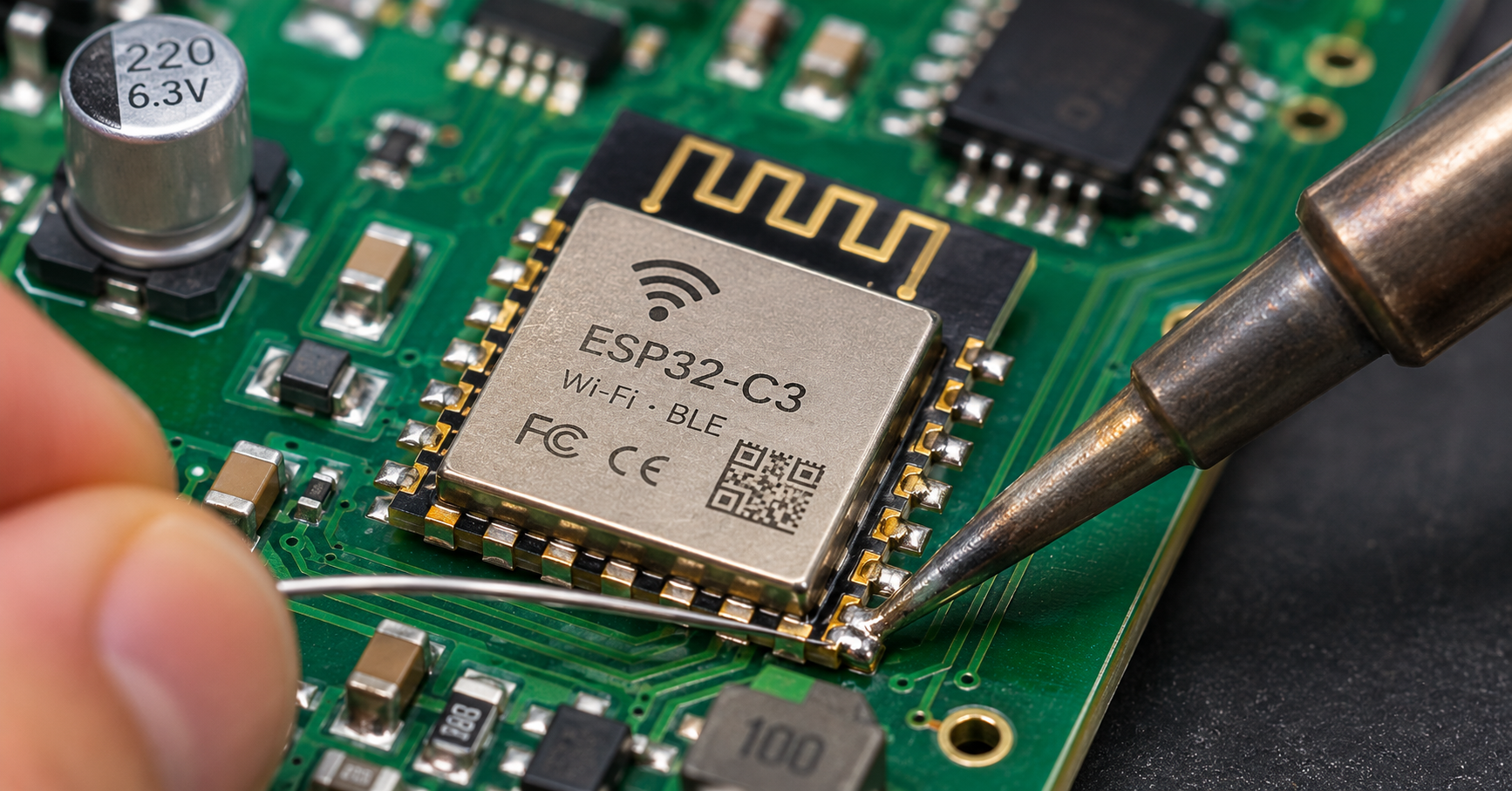
Most electronic products that reach the US market today don’t go through full FCC transmitter certification. Instead, they use pre-certified wireless modules — a Wi-Fi chip, a Bluetooth module, a cellular radio — that already have FCC approval. The device itself then follows a separate, simpler process called a Supplier’s Declaration of Conformity (SDoC).
This is the path GME sees most often. It’s also the path we can help you with. Here’s how it works.
The Two Things Your Product Usually Needs
If your product contains any wireless functionality alongside digital circuitry, you’re likely looking at two compliance requirements, not one:
- The wireless module — a Wi-Fi, Bluetooth, cellular, or other RF component — must be FCC certified. In most cases, the module manufacturer has already done this. You use their FCC ID.
- The host product — the device you’re selling — must comply with Part 15 Subpart B as an unintentional radiator. This is where SDoC comes in.
You don’t certify the module again. You verify that integrating the module into your product hasn’t created new problems — interference, out-of-band emissions, RF exposure issues — and you declare compliance via SDoC.
What Is SDoC?
A Supplier’s Declaration of Conformity is a self-declaration that your product meets FCC standards. It was established through FCC ET Docket 15-170 and applies to unintentional radiators — products that generate RF energy as a byproduct of normal operation rather than as their main function.
With SDoC, there’s no third-party certification body and no FCC database listing. You test the product, keep the records, and attach the required compliance statement. The FCC can request your documentation at any time, so the testing has to be real — but you’re not filing anything upfront.
Testing must be done by an accredited lab. That’s where GME comes in.
What Host Product Testing Actually Involves
When you integrate a certified module into your product, the FCC requires what’s called a composite investigation — testing the complete product with all transmitters operating to confirm nothing has gone wrong in the integration.
Specifically, your lab is checking for:
- Spurious emissions that weren’t present when the module was tested on its own
- Interference between multiple transmitters if your product includes more than one
- Band edge emissions caused by a different antenna than the one the module was certified with
- RF exposure compliance based on how the product is actually used
The FCC’s Modular Transmitter Integration Guide lays out the full set of host manufacturer responsibilities. The short version: using a certified module doesn’t mean your product is automatically compliant. You’re responsible for how it behaves as a complete system.
Common Host Product Scenarios
Here are a few examples of what this looks like in practice:
- Industrial controller with Wi-Fi: The Wi-Fi module has its own FCC ID. The controller needs SDoC testing for Part 15 Subpart B unintentional emissions, plus composite testing to confirm the module performs correctly inside the enclosure.
- IoT sensor with Bluetooth: Same structure. The BT module is pre-certified. The host device goes through SDoC. If the antenna differs from the one used in the module’s original certification, additional testing may be required.
- Medical device with cellular: Cellular modules are nearly always pre-certified. The host still needs SDoC and a composite check, and RF exposure rules apply based on how close the device operates to a user’s body.
What About Full FCC Transmitter Certification?
Some products do need their own FCC transmitter certification — typically when a company is building and selling the wireless module itself, or when the RF design is custom enough that no pre-certified module applies.
That process goes through an FCC-authorized Telecommunication Certification Body (TCB), not a testing lab. GME doesn’t handle TCB certification. If your product falls into that category, we can tell you that clearly and point you in the right direction.
For the vast majority of products — commercial and industrial devices that integrate standard wireless modules — the SDoC plus host product testing path is the right one, and it’s where we do our best work.
Where to Start
If you’re not sure whether your product needs composite testing, what the SDoC requirements look like for your device class, or how to approach RF exposure, a pre-compliance consultation is the fastest way to get clarity.
GME is an ISO 17025 accredited lab for FCC SDoC testing and host product integration testing. Request a quote or reach out with your questions.
